In today’s dynamic industrial manufacturing landscape, ABS thermoforming has emerged as a pivotal technology for plastic casing production, thanks to its unparalleled combination of performance and process advantages. From precision-engineered automotive components and durable appliance housings, to sterile medical device enclosures and high-visibility advertising light boxes, this versatile technology has seamlessly integrated into virtually every facet of modern manufacturing and daily life.
Plastic casings are indispensable cornerstones of contemporary production chains, and ABS thermoforming stands out as the go-to processing solution for their fabrication. By shaping ABS sheets via specialized thermoforming equipment, manufacturers can achieve exceptional production efficiency, cost-effectiveness, and design flexibility—all of which position this technology as the preferred choice for high-volume, high-quality plastic casing manufacturing.
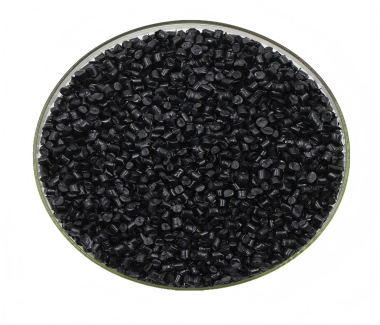
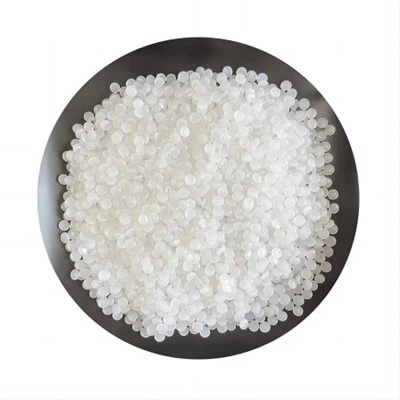
ABS (acrylonitrile butadiene styrene) possesses excellent mechanical properties, making it an ideal choice for housing manufacturing. ABS is non-toxic and odorless, with an ivory-colored, translucent or transparent granular appearance. Its density ranges from 1.08 to 1.18 g/cm³, and its shrinkage rate is 0.4% to 0.9%.These properties make ABS ideal for manufacturing a variety of housing products.
ABS also offers excellent impact strength, allowing for use at extremely low temperatures. It also exhibits excellent wear resistance, dimensional stability, and oil resistance.
The heat deflection temperature of ABS is between 93°C and 118°C, and annealing can increase this by approximately 10°C, allowing ABS housings to operate effectively within a temperature range of -40°C to 100°C.
The ABS blister forming process includes sheet handling, cutting, sheet fixation, heating, forming, demolding, and trimming. Each step has strict technical requirements:
During the sheet handling stage, the ABS sheet must be subjected to high-temperature treatment to evaporate moisture from the sheet and prevent the formation of numerous bubbles in the blister-formed product.
The heating stage requires precise temperature control. The ABS sheet's temperature from softening to forming ranges from 127°C to 180°C, varying depending on the vacuum level and product shape. For rapid vacuum forming of low-draft products, the forming temperature is around 140°C, while for deeply drawn products the temperature is approximately 150°C. Complex products require an upper limit of 170°C.
The forming process is the core of the entire process. The softened sheet is stretched through a bubble blown through the blister mold. Vacuum is then drawn through the mold's vacuum holes, creating negative pressure to force the sheet to adhere to the mold surface. The bubble height is generally controlled at two-thirds of the mold height to ensure uniform material stretching.
When ABS sheet thickness exceeds 2mm, we call it thick sheet blistering. This technology can be used to manufacture large-scale industrial products using engineering plastics such as ABS, acrylic, PETG, PVC, and their modified materials through processes such as sheet positioning, vacuum suction, and cooling to finalize the shape.
The biggest advantage of thick sheet blistering is that compared to injection molding, mold costs are only 1/20th of those of injection molding, and product development cycles can be shortened to 3-5 days.
For users in the product development and growth stages, this technology perfectly solves the problem of high product costs caused by small production batches and rapid product upgrades.
ABS blister casings have a wide range of applications, encompassing numerous industries:
In the automotive industry, ABS blister casings are used in a variety of components, including dashboards, exterior panels, interior trim, and door locks. A specific example is the rear compartment sidewalls of commercial vehicles, which are manufactured using ABS blister casings. This lightweight design avoids the odor associated with traditional fiberglass reinforced plastics.
In the electronics and electrical appliance sector, ABS blister casings are used in medical equipment, food processing equipment, instrument casings, electrical appliance casings, and automotive body panels. Ambulance casings are a typical example of this application. Chengli Special Purpose Vehicle Co., Ltd. uses a melt blister molding process to form ABS material, improving ambulance manufacturing efficiency.
In the building materials sector, ABS sanitary ware (washbasins, bathroom fixtures, and bathtubs) and ABS decorative panels are widely used in the building materials industry. ABS blister casings are also widely used in machine casings, display stands, advertising, bases, and image signage.
Luoyang Dema Import & Export Co., Ltd. aims to provide high-quality, cost-effective products for global factories, plastic product manufacturers, and material distributors. Luoyang Dema Import & Export Co., Ltd. provides the best PP, PE, PVC, POM, PMMA, POE material solutions for plastic product manufacturers, wholesalers, distributors, distributors, factory owners, processing workshops, etc. If you are looking for general plastic materials, please feel free to contact me to get the latest prices.